
Canada-Norway: New momentum for a deepened partnership
NU Veronica Broholm - Innovation Norway
A relationship built on strong historical bonds
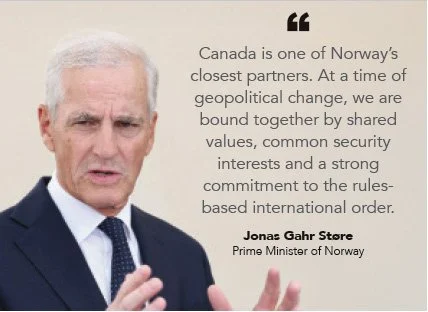
“Canada is one of Norway’s closest partners,” says Norway’s Prime Minister Jonas Gahr Støre. “At a time of geopolitical change, we are bound together by shared values, common security interests and a strong commitment to the rules-based international order. As North Atlantic Treaty Organization (NATO) allies and Arctic nations, I see a range of opportunities to deepen our co-operation in areas such as defence, energy, critical minerals, ocean management and innovation.”
Norway and Canada are seeking a closer co-operation in a range of sectors. The relationship rests on strong bonds across the Atlantic. More than 1,000 years ago, Norse settlers arrived – thanks to both sail and rowing – in what is now called L’Anse-aux-Meadows in Newfoundland. During Second World War, more than 3,000 Norwegians trained on Toronto Island and Muskoka, Ont., to become pilots, navigators and ground crew for the Royal Air Force. Thousands of Norwegian sailors passed through Halifax, Nova Scotia, onboard Norwegian vessels that used the harbour there as a staging hub for convoys across the Atlantic with supplies for the European war effort.
Both countries have taken steps to strengthen their long-standing partnership. Last March, Prime Minister Mark Carney travelled to Norway, where he and Prime Minister Støre agreed to advance co-operation in several areas, including Arctic security, support for Ukraine, and industrial partnerships in space, artificial intelligence, digitalization and critical minerals.
“My ambition is for Norway and Canada to become even closer strategic partners in meeting the challenges and opportunities of the future,” he says.
There are urgent reasons for this ambition. Hanne Ulrichsen, Norway’s ambassador to Canada, notes that Russia’s full-scale invasion of Ukraine has shown that security cannot be taken for granted. Both Canada and Norway have continued to work closely in supporting Ukraine and strengthening deterrence and defence, she adds.
The war has also highlighted the strategic importance of the North Atlantic Ocean and the Arctic, where Norway and Canada play critical roles.
“The Arctic is changing rapidly, not only because of climate change, but also because of growing geopolitical competition,” says Ambassador. Ulrichsen. “As Arctic nations, Norway and Canada have a responsibility to ensure that the region remains stable, predictable and governed by international law.”
This responsibility extends beyond the two countries and represents broader opportunities for international partnerships. Last July, Canada chose Germany’s ThyssenKrupp Marine Systems, partnering with the Norwegian company KONGSBERG, as the preferred supplier for the Canadian Patrol Submarine Project. This is hailed as the largest defence procurement in Canadian history.
“This is much more than a procurement project – it represents a long-term strategic partnership between Canada, Norway and Germany that will last for several decades,” says Ambassador Ulrichsen. “This means closer industrial co-operation, common logistics, joint training and greater interoperability within NATO. This is exactly the kind of long-term co-operation that’s needed in today’s security environment.”
David Perry, president of the Canadian Global Affairs Institute – a non-profit research organization headquartered in Calgary – says the submarine procurement will also translate to significant industrial and economic benefits for all three countries.
But ultimately, the project’s success will be shaped by the level of co-operation and trust between Canada, Norway and Germany.
“Submarines depend on highly sensitive intelligence and technology, requiring an unusually high degree of trust among the countries operating them,” says Mr. Perry.
The foundations for this co-operation are deep. Canada and Norway were both founding members of NATO, and their military ties date to the Second World War, says Mr. Perry. During the Cold War, Canadian and Norwegian forces co-operated on maritime security and contingency planning for the defence of NATO’s northern flank.
The environment and energy transition present more areas for collaboration. Norway has considerable experience to offer Canada, particularly in managing a northern economy that has had to balance resource development, environmental concerns and national security.
Mr. Perry points to how Norway has used revenues from its oil and gas industry to build enormous financial reserves and invest in other parts of its economy, including clean energy and green technologies. It has also become one of the world’s leading adopters of electric vehicles.
For Canada, which is simultaneously trying to develop its resource industries, reduce emissions and build a clean-energy economy, there are lessons to be learned from Norway’s experience, says Mr. Perry.
When it comes to collaborating in the other areas identified last March by the two countries’ leaders – namely space, artificial intelligence, digitalization and critical minerals – Canadian and Norwegian universities and industries will have important roles to play, says Ambassador Ulrichsen.
“Both countries possess world-class expertise in many of these fields, and there is tremendous potential for collaboration between governments, universities and businesses,” she adds.
A strategic partnership is about co-ordinating policies, sharing expertise, investing together and building capabilities that make both countries stronger, says Ambassador Ulrichsen. Today, the partnership between Canada and Norway is more relevant than ever.
“We are trusted partners, close allies and Arctic neighbours who share common values and common interests,” she says. “Together we have a unique opportunity to contribute to a safer, greener and more prosperous North Atlantic and Arctic region. That is the ambition our two prime ministers have set, and one I believe both our countries are well placed to achieve.”
Norway and Canada are seeking a closer co-operation in a range of sectors. The relationship rests on strong bonds across the Atlantic. More than 1,000 years ago, Norse settlers arrived – thanks to both sail and rowing – in what is now called L’Anse-aux-Meadows in Newfoundland. During Second World War, more than 3,000 Norwegians trained on Toronto Island and Muskoka, Ont., to become pilots, navigators and ground crew for the Royal Air Force. Thousands of Norwegian sailors passed through Halifax, Nova Scotia, onboard Norwegian vessels that used the harbour there as a staging hub for convoys across the Atlantic with supplies for the European war effort.
Both countries have taken steps to strengthen their long-standing partnership. Last March, Prime Minister Mark Carney travelled to Norway, where he and Prime Minister Støre agreed to advance co-operation in several areas, including Arctic security, support for Ukraine, and industrial partnerships in space, artificial intelligence, digitalization and critical minerals.
“My ambition is for Norway and Canada to become even closer strategic partners in meeting the challenges and opportunities of the future,” he says.
There are urgent reasons for this ambition. Hanne Ulrichsen, Norway’s ambassador to Canada, notes that Russia’s full-scale invasion of Ukraine has shown that security cannot be taken for granted. Both Canada and Norway have continued to work closely in supporting Ukraine and strengthening deterrence and defence, she adds.
The war has also highlighted the strategic importance of the North Atlantic Ocean and the Arctic, where Norway and Canada play critical roles.
“The Arctic is changing rapidly, not only because of climate change, but also because of growing geopolitical competition,” says Ambassador. Ulrichsen. “As Arctic nations, Norway and Canada have a responsibility to ensure that the region remains stable, predictable and governed by international law.”
This responsibility extends beyond the two countries and represents broader opportunities for international partnerships. Last July, Canada chose Germany’s ThyssenKrupp Marine Systems, partnering with the Norwegian company KONGSBERG, as the preferred supplier for the Canadian Patrol Submarine Project. This is hailed as the largest defence procurement in Canadian history.
“This is much more than a procurement project – it represents a long-term strategic partnership between Canada, Norway and Germany that will last for several decades,” says Ambassador Ulrichsen. “This means closer industrial co-operation, common logistics, joint training and greater interoperability within NATO. This is exactly the kind of long-term co-operation that’s needed in today’s security environment.”
David Perry, president of the Canadian Global Affairs Institute – a non-profit research organization headquartered in Calgary – says the submarine procurement will also translate to significant industrial and economic benefits for all three countries.
But ultimately, the project’s success will be shaped by the level of co-operation and trust between Canada, Norway and Germany.
“Submarines depend on highly sensitive intelligence and technology, requiring an unusually high degree of trust among the countries operating them,” says Mr. Perry.
The foundations for this co-operation are deep. Canada and Norway were both founding members of NATO, and their military ties date to the Second World War, says Mr. Perry. During the Cold War, Canadian and Norwegian forces co-operated on maritime security and contingency planning for the defence of NATO’s northern flank.
The environment and energy transition present more areas for collaboration. Norway has considerable experience to offer Canada, particularly in managing a northern economy that has had to balance resource development, environmental concerns and national security.
Mr. Perry points to how Norway has used revenues from its oil and gas industry to build enormous financial reserves and invest in other parts of its economy, including clean energy and green technologies. It has also become one of the world’s leading adopters of electric vehicles.
For Canada, which is simultaneously trying to develop its resource industries, reduce emissions and build a clean-energy economy, there are lessons to be learned from Norway’s experience, says Mr. Perry.
When it comes to collaborating in the other areas identified last March by the two countries’ leaders – namely space, artificial intelligence, digitalization and critical minerals – Canadian and Norwegian universities and industries will have important roles to play, says Ambassador Ulrichsen.
“Both countries possess world-class expertise in many of these fields, and there is tremendous potential for collaboration between governments, universities and businesses,” she adds.
A strategic partnership is about co-ordinating policies, sharing expertise, investing together and building capabilities that make both countries stronger, says Ambassador Ulrichsen. Today, the partnership between Canada and Norway is more relevant than ever.
“We are trusted partners, close allies and Arctic neighbours who share common values and common interests,” she says. “Together we have a unique opportunity to contribute to a safer, greener and more prosperous North Atlantic and Arctic region. That is the ambition our two prime ministers have set, and one I believe both our countries are well placed to achieve.”
To view this report on The Globe's website, visit globeandmail.com
To view the full report as it appeared in The Globe's print edition Canada-Norway