Despite tight budgets and rising grocery costs, Canadians are stepping up to support Fairtrade-certified products, demonstrating a willingness to pay more to purchase coffee and other goods they trust to be ethically sourced.
Read More
Despite tight budgets and rising grocery costs, Canadians are stepping up to support Fairtrade-certified products, demonstrating a willingness to pay more to purchase coffee and other goods they trust to be ethically sourced.
Read MoreMore women are also coming to The Toronto Hair Transplant Clinic for hair restoration, Kessler adds. “Women now make up about 15 per cent of our patients. Women are somewhat older, as hair loss affects them most frequently around the time of menopause.”
Read MoreThe role of skilled trades is changing, and Fleming College is keeping pace. “Our goal is to ensure that the workforce we are creating has the knowledge, skills, and ability to meet industry needs and respond to the government’s call for skilled trades,” says Theresa Knott, interim president.
Read MoreAt a time when global energy markets are being increasingly disrupted by geopolitical instability, Cameco Corp. is reinforcing its position as a mine-to-market supplier of the nuclear fuel that will help Canada and its allies meet an unprecedented surge in demand for clean, reliable electricity.
Read MoreA relationship built on strong historical bonds
“Canada is one of Norway’s closest partners,” says Norway’s Prime Minister Jonas Gahr Støre. “At a time of geopolitical change, we are bound together by shared values, common security interests and a strong commitment to the rules-based international order. As North Atlantic Treaty Organization (NATO) allies and Arctic nations, I see a range of opportunities to deepen our co-operation in areas such as defence, energy, critical minerals, ocean management and innovation.”
Read MoreSupporting one’s health through food choices has become a dominant trend over the past several years. Canadian consumers are increasingly drawn to food and beverage products that promise a health benefit, as well as products that boost sustainability and environmental benefit.
Read MoreMost employees would readily agree it is crucial their paycheques are accurate and delivered on time, and they acknowledge that payroll’s function is very important to their lives. They may not be as aware of the added value that payroll professionals provide when they apply their expertise to solving problems or enhancing a person’s financial well-being.
Read MoreYounger Canadians are prioritizing travel as a key lifestyle component – taking more leisure trips and looking for affordable ways to experience a “luxury” vacation.
Read MoreA groundswell of support has gathered momentum leading up to July 17, the 100th anniversary of The Royal Canadian Legion. The organization has welcomed thousands of new members, released special anniversary keepsakes, with festivities taking place in Ottawa and in communities across the country.
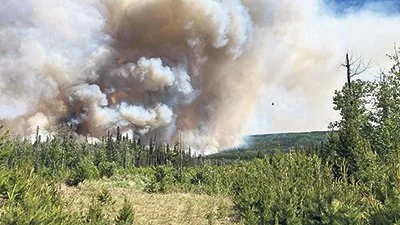
Read MoreWildfire risk is a global problem, with changing conditions leading to longer and more intense fire seasons in many areas across the world. Responses, however, have to be both place-specific and dynamic, proposes Jill Harvey, Canada Research Chair in Fire Ecology, Faculty of Science, Thompson Rivers University (TRU).
Read MoreLeveraging research excellence to develop solutions to urgent global challenges
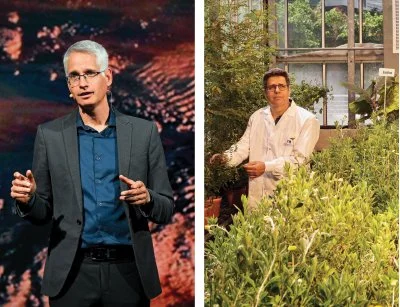
The Earth’s biosphere reached a notable milestone in 2020, when anthropogenic mass – the sum of all human-made things like buildings, infrastructure, cars and cellphones – started to outweigh all living things.
Read MoreWhen seconds matter, donors ensure staff have the best equipment
“Many people think of the emergency department as the front door to the hospital,” says Dr. Wil Smith, chief of medical staff and an anesthesiologist at the West Parry Sound Health Centre (WPSHC).
Read MoreIn today’s digital age, organizations increasingly rely on vital infrastructure like data centres and server rooms, with the rise of artificial intelligence (AI) and high-performance computing accelerating demand. Packed with dense, high-powered electronics and processors, such facilities require a level of climate control that is fast exceeding what traditional cooling technology can offer.
Read MoreTrafalgar Castle School instills human values into technology studies
Robotics, artificial intelligence (AI), digital design and virtual reality (VR) are among the advanced technologies that students engage with from the earliest grades at Trafalgar Castle School. In an increasingly automated world, the educators at Trafalgar strive to prepare graduates to succeed in the growing number of fields that are infused with technology.
Read MoreAs geopolitical tensions sharpen and the Arctic takes on renewed strategic importance, Canada is facing a familiar question with fresh urgency: how to secure its sovereignty in an increasingly contested world. For Leo Martin, who was named chief operating officer of Seaspan Shipyards earlier this year, part of the answer lies not just in what Canada builds, but where – and how – it builds it.
Read MoreFor one Calgary family, decades of observing the natural world has shaped not only how they live but the legacy they are choosing to leave behind with the Nature Conservancy of Canada (NCC).
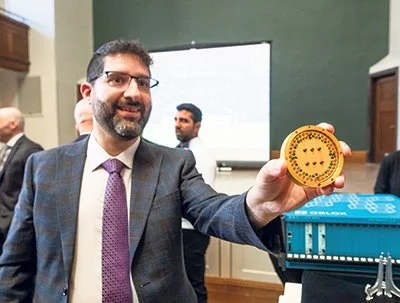
Read MoreCanada’s first full-stack, university-owned quantum computer opening new horizons at the University of Saskatchewan
Read MoreWhile Canadian businesses still lag in AI adoption compared to G7 peers, Cam Linke, CEO of Amii (Alberta Machine Intelligence Institute), sees an encouraging uptick in leadership interest.
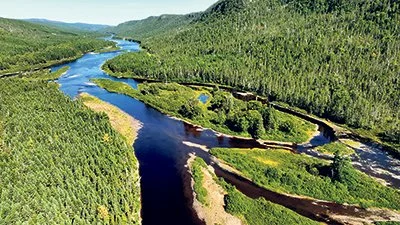
Read MoreWhen the City of Saint John, New Brunswick, was making plans to protect its drinking water, it did not start with rivers and lakes. It started with land. By working with the Nature Conservancy of Canada (NCC) to protect mature, intact forests, lake shorelines and wetlands, the city conserved watersheds that act as natural filters, reducing pressure on water treatment systems and safeguarding Saint John’s water supply for the long term.
Read MoreEarth Day is celebrated on April 22 each year to raise awareness about environmental challenges and motivate individual and community action to build a more sustainable planet. First marked in the U.S. in 1970, Earth Day went international in 1990, with Canada among the countries that year to join the global environmental movement.
Read More