
Decades of success and business resilience inspired by Canadian values
Supplied
When Tom Stevenson and Darryl Cooper talk about how the enterprises founded by their families approach doing business, the similarities are striking. Both credit two principles as key enablers of success: a focus on values and a dedication to putting people first.
The outcomes speak for themselves: Hub Equipment, started by Mr. Stevenson’s grandfather, enters into its ninth decade of operation in April 2026. And Cooper Equipment, a 100 per cent Canadian-owned national construction equipment rental company, celebrates over five decades of growth with close to 90 branches across Canada.
Both businesses have a track record of achieving an outsized impact for employees and customers as well as communities, the Canadian construction industry and society as a whole. When they joined forces in 2023, and Hub became a specialty division at Cooper, the acquisition at once preserved the legacy and amplified the reach of each enterprise.
An eight-decades-long legacy of success
“Hub Equipment was started in 1946 by my grandfather in Moncton, New Brunswick, a city known as the hub of the Maritimes, hence the name,” recalls Mr. Stevenson. “During the 1950s St. Lawrence Seaway expansion, the company moved to Cornwall and Brockville, and then ultimately shifted west to Toronto in the late 1950s, where it’s been headquartered ever since.”
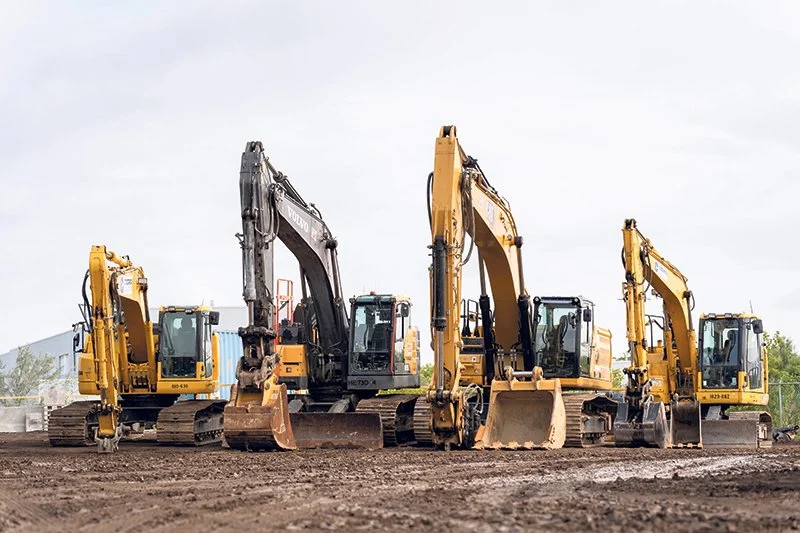
With eight decades in operation, the company evolved alongside the Canadian construction industry, expanding from the Maritimes to Toronto and later Edmonton. Hub went from renting surplus, post-WWII construction equipment in the early stages of the Canadian rental industry to later specializing in heavy equipment, including brands like CAT, Volvo and John Deere, to meet modern, specialized construction needs.
“Not every company achieves an 80-year anniversary, especially in a cyclical industry like construction. We actually had four generations of Stevensons work in the business,” he says. “But every business owner has to have an exit strategy.”
Once Mr. Stevenson made the decision to sell, the alignment with Cooper as the right strategic buyer soon became obvious. “We had similar customers but rented them different equipment,” he notes. “For Hub, it was critical to find a partner who shared our values and respected our history. Our cultural alignment with Cooper ensured both our employees and our customers could continue to grow and prosper.”
Hub becoming part of Cooper meant “customers were able to rent a broader range of equipment, giving them more flexibility and more locations across the country,” Mr. Stevenson says. “Cooper also ensured the retention of our legacy by letting the Hub brand continue.”
Turning a ‘people-first’ approach into a competitive advantage
Hub’s legacy is closely linked with a strong focus on caring for employees and customers, which Mr. Stevenson believes was a key differentiator that allowed his business to thrive.
“Hub prospered because of our core integrity and a reputation for fair business,” he says. “The consistency of our service with a strong overall customer experience and reliable equipment allowed Hub to adapt to changing economic conditions and challenges.”
This “people-first” principle was also a driving force from day one for Cooper Equipment Rentals, says Mr. Cooper. “Cooper Equipment Rentals was founded in 1972 by my father, Gord Cooper. He was working for what was a large rental company at that time, where he felt corporate interests didn’t always align with customer interests. He struggled with that.”
The motivation to take a different approach resulted in “the core philosophy of focusing on superior service and reliability – and on treating people with respect,” he says. “This is expressed through our charter statement, what we call the Cooper Difference.”
Rather than being a mere soundbite captured on a sign or a quote in marketing materials, “the Cooper Difference is embedded into everything we do across the organization,” emphasizes Mr. Cooper. “It’s a social contract for the way we work together and treat each other.”
Finding reflection in internal communications, performance reviews and employee recognition programs, the Cooper Difference “provides the goalposts for framing decisions better than any big book on policy could – and that’s why we spend a lot of effort on creating this culture of responsibility,” he explains. “We also believe that the best decisions are made by those closest to the customer, so we give our leaders a lot of autonomy. Trusting people in the field to make decisions makes us faster and more responsive, with better outcomes for our customers.”
This values-based framework also guides growth decisions, such as acquisitions, says former Cooper CEO and now executive chair Doug Dougherty, who advises to “be patient and prepared to listen, and never underestimate the importance of people in making acquisitions work.”
The challenge with acquisitions often comes around integration, and particularly around culture, systems and expectations, he proposes. “Opportunity lies in partnering with strong local operators, and in giving them access to scale, systems and capital.”
For Mr. Stevenson, the combination of shared values and access to scale was a powerful draw. “We have a similar approach, where the day-to-day welfare of each employee is important to us,” he says. “But where a company with 1,300 people can be in a different class from a business employing 15 is in resources for making employees aware of potential issues affecting their workplace, such as safety and cybersecurity. That’s where Cooper has stellar programs.”
Adding value for industry and communities
For Mr. Dougherty, the approach to company growth is the same as to building resilience into everyday operations. It starts with realizing that “companies that perform well, even in uncertain conditions, tend to avoid chasing growth for growth’s sake.”
Cooper mainly serves construction, infrastructure and industrial service customers, “who are operating in an increasingly complex environment,” he says. “General economic uncertainty has delayed private-sector investment in projects. Labour availability has been tight, and equipment costs have risen substantially over the past few years. As a result, projects are being sequenced carefully, and customers are cautious and demand more flexibility from partners like us.”
Cooper’s response has been to “focus on being a sustainable organization that can flex up and down without breaking our culture or affecting our service levels,” Mr. Dougherty says. “For that, it’s important to be clear about where we can truly add value.
“At the core, our company helps our customers build safely, efficiently and on time. Our role goes beyond supplying equipment. We invest in local teams. We champion Canadian procurement initiatives. We partner meaningfully with Indigenous businesses, and we support community infrastructure that adds long-term value to those communities,” he adds.
“For a business like ours, with branches across the country, it is important to stay connected to communities,” says Mr. Cooper. “And we believe in giving back to the communities where we work. In our Golden Equipment campaign, for example, we feature golden pieces of equipment and donate 50 per cent of their rental revenue to local communities.”
The Golden Equipment campaign, which is part of a wider range of Cooper Cares initiatives, has raised more than $575,000 for local community organizations since its inception in 2022, supporting children’s and family mental health as well as national initiatives such as Movember and Steps for Life.
In addition, Cooper aims to strengthen outcomes in the industries it serves, for instance, through initiatives designed to address critical issues like workforce development. One example is support through events and bursaries for the Canadian Association of Women in Construction, “an organization that works to attract more women into construction careers and especially skilled trades,” says Mr. Cooper. “We think that’s important in a traditionally male-dominated field that faces labour shortages.”
Efforts to strengthen talent pipelines also extend to internal teams, where Cooper employees can access support like apprenticeships, for example, when they want to advance their careers. Mr. Cooper adds that some of the company’s most senior leaders started in entry-level positions, such as yard coordinators, and now oversee regions with responsibility for about 300 employees.
Investing in young people and helping advance their careers benefits the company in the long run, he proposes. “When Doug and I set out on this journey, we wanted to become an employer of choice and create a vibe where people want to come work at Cooper. From what we’re seeing, for example, when our employees post success stories or when people reach out to inquire about work opportunities, we’re hitting the mark with our culture.”
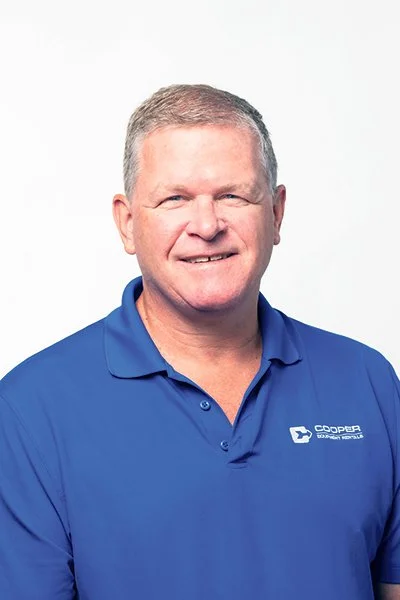
“When Doug [Dougherty] and I set out on this journey, we wanted to become an employer of choice and create a vibe where people want to come work at Cooper. From what we’re seeing, for example, when our employees post success stories or when people reach out to inquire about work opportunities, we’re hitting the mark with
our culture. ”
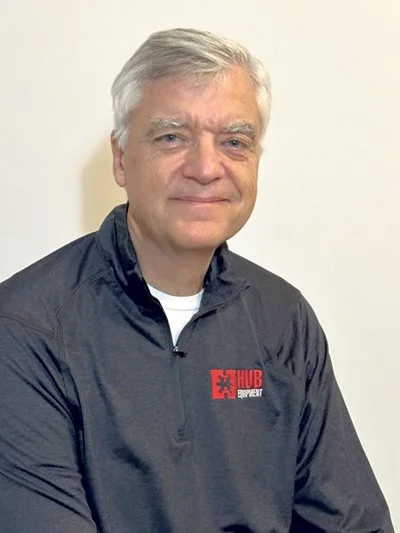
“For Hub, it was critical to find a partner who shared our values and
respected our history. Our cultural alignment with Cooper ensured
both our employees and our customers could continue to grow
and prosper. ”
A Canadian-values-based compass for navigating uncertainty
Cooper’s growth trajectory as a successful Canadian homegrown company with a nationwide presence has been achieved “not through one big, bold move but through hundreds and thousands of good decisions, guided by a strong commitment to a clear set of values,” says Mr. Dougherty. “Our guiding values are really Canadian values. For example, we Canadians are very welcoming people, who believe in fairness. We know winning is not a zero-sum game; we believe in win-wins.”
With such a compass, leaders can “step back when there are tough decisions to be made to see whether they are reflective of our values,” he notes. “It’s not about predicting the future, it is about planning for multiple scenarios. It requires courage but also humility to adjust course if and when that’s needed.”
Among the evolving conditions that shape Cooper’s outlook “are changing economics of the business and rapid advancement of technology,” says Mr. Dougherty. “This means higher costs, more data, faster decision cycles and greater customer expectations. What hasn’t changed is the importance of relationships built on mutual trust and respect for Canadian values around diversity, fairness and community.”
A recent example of the company’s ability to navigate uncertainty comes from the early months of the coronavirus pandemic, says Mr. Cooper. “We really went back to our values of putting people first. We guaranteed that everybody would have a job and that we would work together to get through this. As our competitors laid off people and closed branches, we doubled down. Then, when construction was deemed an essential service, we were ready and far ahead of the competition.”
The same approach, “of making sure our people are secure, and our customers are looked after,” can guide decisions for navigating the current economic uncertainty, Mr. Cooper proposes. “We can’t change what’s happening with tariffs and in the U.S., with interest rates or the housing market. What we can control is how we look after our people.”
Mr. Stevenson echoes this sentiment. “To navigate constant change and inevitable adversity, you need resourcefulness and resilience,” he says. “You also need to be consistent in your values.”
While he regards Hub’s acquisition as his “exit strategy,” Mr. Stevenson cites several reasons for staying involved in the business: “I want to be here when we celebrate Hub’s 80th anniversary. I want to witness Hub personnel thrive in the Cooper environment, and I want to help grow our asset base.
“I still have a passion for the equipment rental industry, and I spent a good part of my career cultivating relationships with contractors, including in oil and gas pipeline construction and maintenance,” Mr. Stevenson adds. “This industry is looking promising in Western Canada. With the memorandum of understanding between the Alberta government and the federal government to build a new pipeline, I’d like to help get our fleet of large pipelayers, which are parked in Edmonton, back to deployment.”
Mr. Dougherty not only shares this optimism, he sees the current economic climate as a big opportunity. “What we’ve seen is a wake-up call for Canada. We’ve relied heavily on certain facts, and this has resulted in some complacency. I’m actually very excited about our future and think we’re on the right track. It is good for Canada to focus on building a sense of community among Canadians and on bolstering our reputation around the world,” he explains.
“The future is bright for Canada,” says Mr. Dougherty, who envisions Cooper being a part of that story. “When we do our job well, we help ensure that projects get completed, people stay employed, and Canadian communities can grow responsibly.”
To view this report on The Globe's website, visit globeandmail.com
To view the full report as it appeared in The Globe's print edition Construction trades