
Delivering made-for-Canada, mission-critical solutions
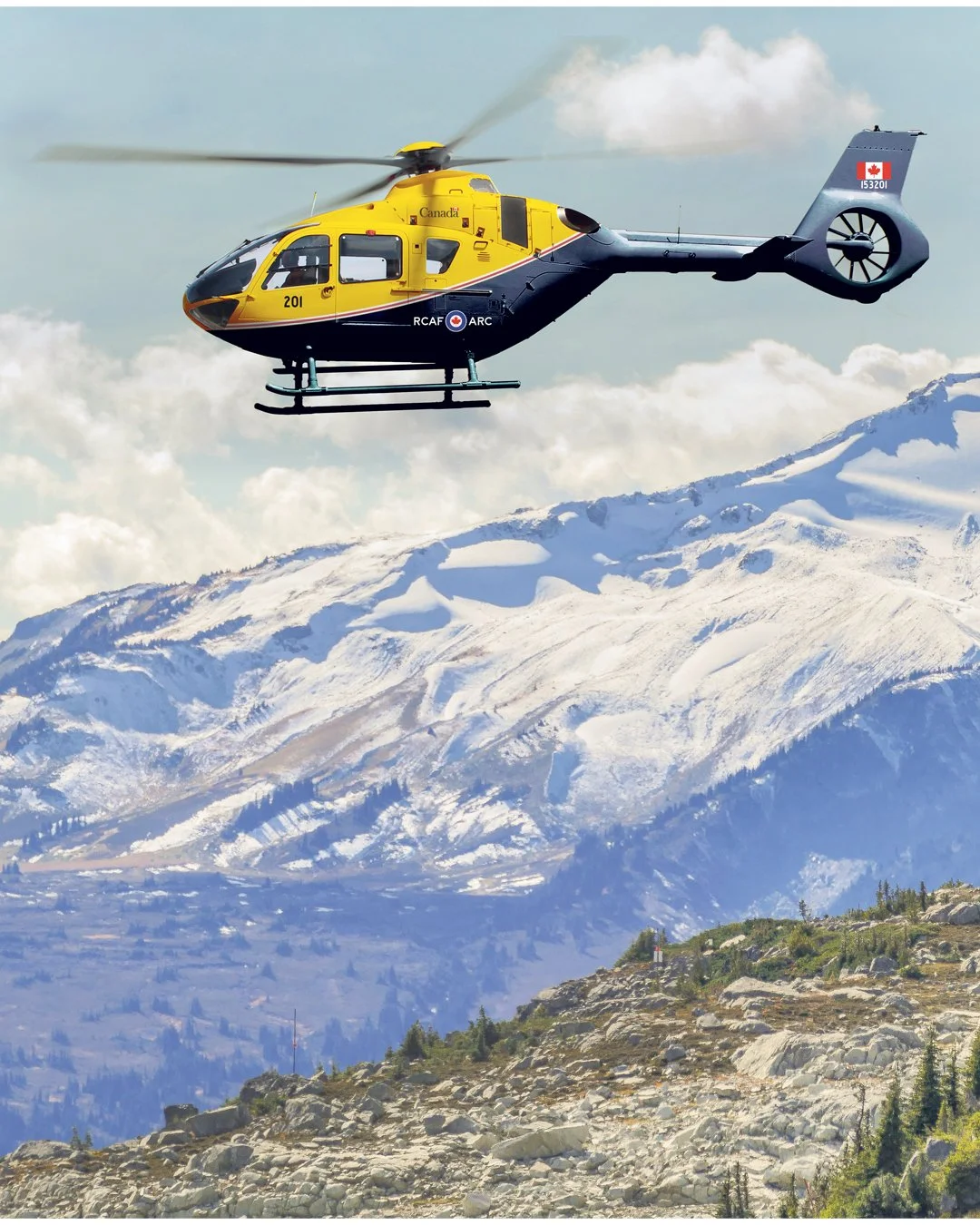
Keeping Canadians safe, connected and supported has been a priority for Airbus Helicopters in Canada for over four decades. supplied
A focus on economic resilience and national security is reshaping Canada’s aerospace and defence landscape, with the current geopolitical climate bringing an emphasis on sovereignty, readiness and long-term resilience.
“When it comes to protecting Canadians and advancing sovereignty, capability matters – and so does the partner behind it,” says Olivier Michalon, executive vice president, Global Business for Airbus Helicopters. “Our vision is to be the trusted made-for-Canada solution for Canada’s helicopter requirements by combining proven global platforms with a strong domestic presence.”
Canada’s clear shift toward sovereign capability, domestic industrial strength and solutions that deliver long-term value for Canadians “align directly with how we operate at Airbus Helicopters in Canada,” he explains. “We are a Canadian company with deep roots in the country, supporting both civil and defence missions coast to coast.”
Helicopters are essential to keeping Canadians safe, connected and supported across a vast and often challenging geography, including through the support of emergency services, search and rescue, utility operations, critical infrastructure and national defence, according to Mr. Michalon.
“For more than 40 years, Airbus Helicopters in Canada has been proud to support these missions,” he says. “Our presence here combines local expertise, Canadian jobs, industrial capability and proximity to customers with the scale, innovation and proven solutions of a global aerospace leader.”
Canadian footprint serves as ‘investment multiplier’
As Canada looks to align “procurement with strategic industrial decisions, modern defence investment is no longer simply about acquisition – it is about building long-term national capability, resilient supply chains and domestic industrial strength,” says Mr. Michalon.
“Funding is increasingly tied to outcomes, operational capability, readiness, sovereignty and economic return.”
The resulting environment is at once more competitive and more focused, where programs are evaluated not only on technical capability but on the strength of the industrial proposition behind them, he says. “Canada is investing in defence and security, and that creates space for trusted partners who can demonstrate long-term commitment and proven execution.”
Airbus is “well positioned to contribute through a combination of proven platforms, global expertise and a deep Canadian industrial base,” Mr. Michalon emphasizes. “Our model combines global experience with an established Canadian footprint, which serves as a significant investment multiplier. Rather than starting from scratch, we can leverage our existing infrastructure to immediately focus on creating high-value jobs and strengthening the Canadian supply chain – all while delivering the performance and in-country support required for critical missions.”
This strong value proposition is rooted in an alignment of strategic priorities, he notes. “Our priorities are centred on delivering capability where it matters most for Canada today – while positioning for the opportunities of tomorrow.
“First, we are focused on bringing forward the right solutions for Canadian missions: proven, modern platforms able to support defence, security, public safety and essential civil operations in one of the world’s most demanding environments,” Mr. Michalon explains. “Second, we continue to strengthen our role as a Canadian industrial partner and an important contributor to Airbus globally.”
Canada is not only commercially important to Airbus but has a strategic role in the company’s global industrial and innovation network, he says. “Airbus already sources approximately $2-billion annually from Canadian suppliers, and we see further opportunity to expand that ecosystem.”
Airbus’s investments in Canada – across manufacturing, supply chain, services and partnerships – create long-term economic value, says Mr. Michalon, who points to the example of the company’s composite manufacturing and light single engine repair and overhaul capabilities at Fort Erie, which contribute to helicopter programs worldwide while anchoring high-value expertise in Canada.
“Third, execution remains a key priority. In today’s environment, it is not enough to offer the right platform; customers and governments also need confidence in the partner behind it,” he says. For example, initiatives like the Future Aircrew Training program, which will deliver 19 H135 training helicopters to the Royal Canadian Air Force, demonstrate Airbus’s ability to deliver on time, to the required standard and with long-term support in place.
“Finally, we are focused on future growth opportunities in Canada,” says Mr. Michalon. “This includes bringing forward proven platforms that can meet evolving defence, security and civil requirements – while continuing to expand Canada’s role within the wider Airbus ecosystem.”
Delivering a ‘made-for-Canada’ helicopter solution
Today, more than 830 Airbus helicopters are operated by approximately 230 customers across the country, illustrating “a track record that matters, particularly in sectors where availability and mission readiness are critical,” says Mr. Michalon.
Additionally, the organization’s presence in Canada is deeply integrated into the Canadian industrial landscape, supporting a workforce of more than 5,300 people across the country – alongside a broad network of suppliers and partners.
“Our role in Canada extends well beyond supplying helicopters,” he explains. “We also provide long-term support throughout the life cycle of the aircraft, from training and maintenance to technical expertise, parts availability and close customer proximity that helps operators remain mission ready. “
R&D is another key focus area, since “nations that design, build, sustain and modernize advanced systems in defence and aerospace retain a strategic advantage,” notes Mr. Michalon. “For Airbus Helicopters, innovation must translate into stronger readiness, better industrial performance, smarter sustainment and more capable fleets.
“Ultimately, innovation isn’t just about future technology,” he adds. “It is about ensuring we continue to deliver smarter, more capable and more resilient solutions while strengthening Canada’s intellectual property position in defence and dual-use technologies.”
This has resulted in a strong “alignment between Canada’s evolving security priorities and our portfolio,” says Mr. Michalon. “Platforms such as the H145M and H175M offer modern technology, range and multi-mission versatility, and the performance for arctic, maritime and security operations across Canada.”
By leveraging the strategic axis between Canada and Europe, Airbus is uniquely positioned to help Canada advance its leadership in aerospace and defence, he proposes. “We are committed to delivering solutions that ensure seamless NATO interoperability, reinforcing Canada’s standing as a capable and dependable ally.”
In essence, “our ambition goes beyond supplying aircraft. We want to help strengthen Canada’s helicopter ecosystem through skilled jobs, industrial investment, local support and long-term partnerships,” Mr. Michalon sums it up. “By fostering long-term industrial capability, we are aiming to create sustainable activity that addresses both Canada’s domestic requirements and the broader international market.”
To view this report on The Globe's website, visit globeandmail.com
To view the full report as it appeared in The Globe's print edition Advancing Canadian defence and security