
Canada’s not done making medical history yet
By Laura Syron,
President & CEO of Diabetes Canada

A fun fact that I absolutely love sharing with folks I meet in my professional (and personal) life is that we at Diabetes Canada are the proud owners and caretakers of the Banting House National Historic Site in London, Ontario. The house belonged to Dr. Frederick Banting, and it’s the place where he woke up one stormy night in 1920 with a brilliant idea that ultimately led to the discovery of insulin.
Referred to as “the birthplace of insulin,” it is now a wonderful museum and pilgrimage site for people from around the world who owe their life to Banting and his fellow scientists Best, Collip and Macleod.
As a caretaker of this revolutionary legacy, we at Diabetes Canada are constantly reminded of what’s possible when brilliant minds focus on seemingly impossible goals.
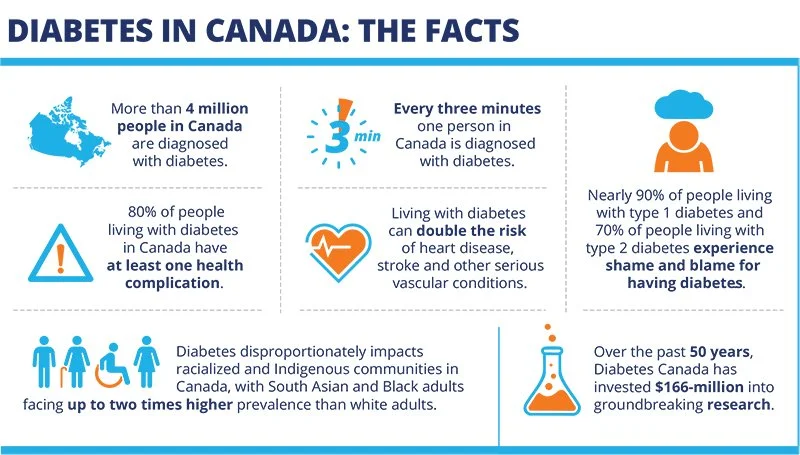
And we’ve been honouring that legacy by continuing to support Canada’s deep diabetes research talent pool. Last year marked 50 years of our organization funding breakthrough research. Since 1975, when we established the Charles H. Best Research Fund – named for Banting’s co-discoverer – we’ve invested more than $166-million in supporting researchers who have brought us world firsts like the Edmonton Protocol, the artificial pancreas and the development of treatments like GLP-1 medications.
“Our universities and research institutions are hubs of ingenuity, where world-class scientists and researchers are pushing the boundaries of what’s possible. The advances we’ve made in diabetes research are a testament to what we can achieve when we believe in ourselves and support ourselves. ”
Hope on the horizon
Fast forward to today, and Canada continues to lead the charge in diabetes research.
These innovations are inching us closer to a cure, offering hope to millions who live with diabetes every day. Building on the Edmonton Protocol breakthrough, Diabetes Canada-funded researchers have developed a way to manufacture large quantities of insulin-producing cells – which could overcome our reliance on donor cells.
Incredible advances to the closed-loop artificial pancreas continue, which significantly reduces the mental burden of diabetes and is leading to better health outcomes.
And research teams are currently exploring how to make type 2 remission protocols less severe and grueling – making remission much more accessible to many more people.
A year (nearly) of Canadian resilience
It’s been almost a year since the U.S. tariffs sparked a surge in Canadian patriotism and a renewed focus on building our nation’s power and potential. That moment reminded us of the incredible talent, skills and expertise we have right here at home. It was a call to action – a reminder to bet on ourselves and invest in the people and institutions of Canada. Thankfully, the federal government announced a $1.7-billion investment in the budget last fall to attract and retain world-class research talent over the next decade. Collectively, we must build on this momentum and not allow it to stall.
Our universities and research institutions are hubs of ingenuity, where world-class scientists and researchers are pushing the boundaries of what’s possible. The advances we’ve made in diabetes research are a testament to what we can achieve when we believe in ourselves and support ourselves.
This surge in nation-building aspirations must not fade. We need to double down on our commitment to Canadian research talent, ensuring that our brightest minds have the resources and support they need to continue driving innovation.
Canada can do hard things
Over the last few years, I’ve come across many people in my life or online embracing the personal mantra “we can do hard things,” introduced by American author Glennon Doyle. I love the resilience and empowerment it has brought to so many on a personal level. But what if we took this idea and brought it to the national consciousness?
Canada can do hard things. Our best days are not behind us. We are a nation of dreamers, innovators and problem-solvers. Our global contributions to diabetes care and management are a living testament to that. From the Edmonton Protocol to the groundbreaking research happening today, we’ve proven time and again that we have what it takes to tackle the toughest challenges.
As someone living with type 2 diabetes, I am deeply inspired by the progress we’ve made and the potential that lies ahead. But this journey isn’t just about science; it’s about people. It’s about the millions of Canadians who wake up every day and manage their condition with courage and resilience. It’s about the researchers, health care providers and advocates who refuse to give up.
Together, we can do hard things. We can push the boundaries of what’s possible and create a world where diabetes no longer defines or limits us. Let’s continue to support and celebrate the incredible work being done right here in Canada. Because when we invest in research, we invest in hope.
To view this report on The Globe's website, visit globeandmail.com
To view the full report as it appeared in The Globe's print edition Diabetes – Today and tomorrow