
New strategy designs a future-ready trades system
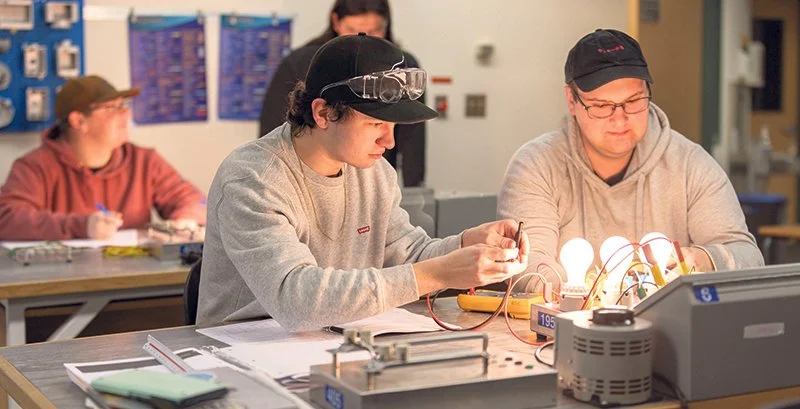
Red Deer Polytechnic is responding to industry demand with a strategy designed to add more skilled tradespeople into the workforce pipeline. SUPPLIED
As governments and industry move forward with a wave of new infrastructure projects, Canada is confronting a growing shortage of skilled trades workers. Alberta alone is short an estimated 22,000 workers, a figure that is expected to rise, says Rob Thompson, vice-president of manufacturing west at NOVA Chemicals.
“When we hear about these nation-building projects, we know we’ll need highly skilled, technically proficient tradespeople to build those pipelines, mines, ports and other capital projects. It’s a supply and demand issue,” he says, noting that for NOVA Chemicals, the country’s largest petrochemical producer, the challenge is compounded by an aging workforce nearing retirement.
The need to address that mounting gap helped spur the recent launch of the Central Alberta Trades Strategy, says Mr. Thompson, a regionally co-ordinated initiative, co-led by Red Deer Polytechnic and NOVA Chemicals, with participation from Olds College, K–12 education and industry partners. The strategy is aimed at eliminating structural issues and modernizing how trades training is delivered and supported, explains Mr. Thompson. “A key priority is to enhance the overall ecosystem for the trades.”
Lindsay Engel, vice-president, academic and student experience at Red Deer Polytechnic, who has been working on the strategy over the past 18 months, agrees that what’s needed is a “holistic stance, from a systems-level perspective.”
“When we hear about these nation-building projects, we know
we’ll need highly skilled, technically proficient tradespeople to build those pipelines, mines, ports and other capital projects. It’s a supply and demand issue. A key priority is to enhance the overall ecosystem for the trade”
She notes that “part of our mandate as a polytechnic is to respond to industry needs, and the demand for more apprentices and an increased workforce.”
Unfortunately, the traditional model for attracting, training and retaining workers in the trades is no longer working, she says. “Training pathways are fragmented, lack flexibility and can be difficult to navigate, particularly for learners outside major urban centres.”
The new integrated approach will be centred on learners, employers and communities, says Ms. Engel. It will bring training closer to where people live and work, offering micro-credentials that can be completed in shorter, flexible segments and strengthen work-based learning opportunities through apprenticeships, co-operative placements and mentorship.
“It will remove barriers,” says Ms. Engel, for example, by improving access to programs especially for under-represented groups, including Indigenous learners and those living in rural or remote communities.
The new strategy aims to improve completion rates in apprenticeship programs, currently hovering between 40 and 65 per cent (depending on trade), adding more people to the workforce pipeline. “We’d also like to create a digital apprenticeship platform, where learners and instructors benefit from resources and support,” she says, explaining that another goal of the plan, which outlines seven interconnected initiatives, will be parity of esteem, “elevating trades as a rewarding and respected career path, given equal weight and value as other occupations.”
One of the Central Alberta Trades Strategy’s strengths, says Ms. Engel, is the collaboration of cross-sector partners with diverse perspectives to better align training with workforce needs. For Red Deer Polytechnic, Ms. Engel says a systems-level approach is critical, one that integrates the perspectives of industry, K–12 education, post-secondary institutions and government.
The strategy’s next phase involves establishing a coalition and shared governance model, she says, “where we can pool resources and make decisions together to have the greatest economic impact.”
For NOVA Chemicals and industry, adds Mr. Thompson, outcomes of the Central Alberta Trades Strategy will bring workforce stability and a trades system that is “more responsive, inclusive and resilient, and capable of supporting Alberta’s next generation of economic growth.”
More information about the Central Alberta Trades Strategy (CATS) at https://rdpolytech.ca/CATS
To view this report on The Globe's website, visit globeandmail.com
To view the full report as it appeared in The Globe's print edition Colleges & Institutes