
Right moves needed to modernize Canada’s military
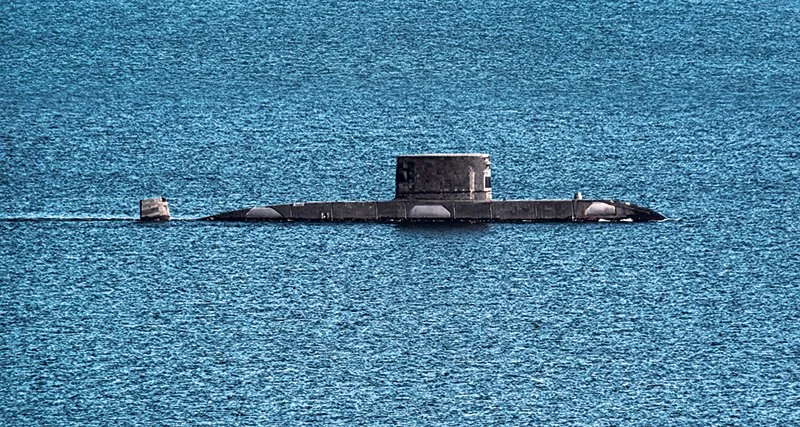
The Royal Canadian Navy urgently requires a replacement for its aging Victoria-class fleet to defend the Arctic and Pacific approaches. shaunl via getty images
The Canadian government has initiated an ambitious program to rapidly rearm the Canadian Armed Forces (CAF) while trying to jumpstart a sluggish domestic economy. The centrepiece of the effort is the newly announced Defence Investment Agency (DIA). Modelled after the Housing Task Force, the DIA is designed to short-circuit the labyrinthine bureaucracy that has long plagued military procurement.
But Richard Shimooka, a senior fellow at the Macdonald-Laurier Institute, believes that without a fundamental repair of the underlying system, the new agency risks collapsing under the weight of political interference and a critical shortage of human capital.
“If there is a front-burner issue in Canadian defence today, it’s the future of the defence industrial base,” says Mr. Shimooka. “But there are several early warning signs that suggest the government’s policy foundation for this process is potentially flawed.”
The People Problem
The most immediate hurdle facing the DIA is not a lack of funding, but a lack of people, he says, pointing out that many project staff positions within the current procurement system are operating at 30 to 50 per cent capacity.
The shortage is particularly acute in the post-selection phase – the critical period where contracts are managed and equipment is actually delivered. Mr. Shimooka describes this as a “generational deficiency” resulting from 30 years of austerity.
“The individuals needed to staff these programs do not exist,” he says. “The government never trained and sustained them through the system.”
These roles require a trifecta of qualifications: high-level security clearances, bilingualism and highly specific technical knowledge limited to military applications. They cannot simply be headhunted from the private sector because the private sector does not train for the specific bureaucratic and technical needs of government defence acquisition.
“It will likely take a decade or more to fully address,” adds Mr. Shimooka, noting that while the DIA may try to rationalize staff, the sheer volume of new systems required for the government’s planned military expansion will overwhelm the existing workforce.
Beyond the staffing challenge lies a philosophical tug-of-war, he says.
“Is the goal of defence procurement to equip soldiers for war, or to create jobs for voters?”
Some federal cabinet ministers have framed defence spending as an industrial stimulus tool, but Mr. Shimooka says this approach ignores the reality of Canada’s industrial landscape.
The ‘Made in Canada’ Trap
While Canada has pockets of excellence – such as Irving Shipbuilding or General Dynamics Land Systems – the country lacks the capacity to produce finished, complex military systems independently.
For example, while Bombardier produces world-class aircraft, they are effectively a “Tier 1” supplier. To turn their jets into military assets, the airframes must often go to U.S. contractors to be fitted with the sensors and mission systems that constitute the actual combat capability.
Attempting to force a “Made in Canada” solution on complex systems can lead to what Mr. Shimooka calls the “chasm of death” – where promising prototypes fail to reach commercialization due to a lack of long-term government support – or worse, the delivery of inferior equipment.
He points to the C-295 search and rescue aircraft procurement as a cautionary tale where industrial benefits were prioritized over capability, resulting in a system that struggled to meet the Royal Canadian Airforce’s needs.
The Submarine Dilemma
Mr. Shimooka says the tension between political economic goals and military necessity will likely come to a head with the upcoming decision on the Canadian Patrol Submarine Project. The Royal Canadian Navy urgently requires a replacement for its aging Victoria-class fleet to defend the Arctic and Pacific approaches.
The two primary contenders offer a stark choice. The South Korean KSIII submarine is viewed as a lower-risk option that could be delivered roughly three to five years earlier than its German competitor. However, political pressure may favour the German Type 212 due to perceived economic spinoffs or European diplomatic alignment.
“Closing the capability gap should be the government’s first priority,” says Mr. Shimooka. He notes that the “geopolitical alignment” criteria are often subjective and difficult to operationalize, whereas the ability to deploy a submarine to defend sovereignty is measurable and urgent.
Five Years Behind
Ultimately, he says, the modernization of the CAF requires a shift in mindset from peacetime efficiency to wartime scalability, noting that Canada is currently “five to seven years behind our allies” in defence thinking.
While allies are asking if they can produce munitions and ships at scale during a high-intensity conflict with a peer adversary, Canada is still struggling to navigate the basic bureaucracy of buying equipment.
For the DIA to succeed where previous initiatives have failed, it must navigate a minefield of political parochialism and structural neglect, says Mr. Shimooka. If the agency becomes merely another venue for cabinet ministers to fight over regional job creation, the modernization effort will fail.
“Defence policy leads defence industrial policy,” he says. “People think, ‘Well, if we build this here it will help us.’ But no, because you can waste a lot of money very quickly and not get a good military out of it.”
To view this report on The Globe's website, visit globeandmail.com
To view the full report as it appeared in The Globe's print edition Advancing Canada’s defence and security